9 Common Writing Mistakes New Fiction Writers Make
A developmental editor's honest breakdown of the 9 most common mistakes new fiction writers make, and exactly how to fix each one.

Listen up, friends! These nine mistakes could be quietly killing your great story.
I'm Leslie, and as a developmental editor and book coach, I see these come up constantly in the manuscripts I work on. These mistakes are natural, and they're easy to make when you're learning writing craft. But they're also easy to fall back into, even when you've been writing for years. So if you're doing something on this list, don't feel bad! We’ve all been here. :)
The goal is just to name them, fix them, and get back to writing the story you're meant to tell.
1. Lack of interiority
This is the number one mistake I see, by a significant margin.
Interiority refers to your character's inner thoughts, feelings, reflections, and access to their own inner world. When a story lacks it, readers are watching events happen from the outside without any real emotional access to the character experiencing them. The plot might be genuinely interesting, but the story feels flat or detached. Characters start to feel robotic. Motivations become unclear.
The fix: Regularly weave your character's inner thoughts, emotions, and reactions into your scenes. If your character is in the middle of a tense argument, don't just describe the dialogue and the action. Show the internal struggle underneath it. What are they doubting? What are they holding back? What do they think but won't say?
The goal is a balance between what's happening externally and what's happening internally. Just be careful not to tip too far into introspection. Focus on the moments that actually drive the plot or reveal something meaningful about who this character is.
2. Inconsistent characters
A character becomes inconsistent when their behavior, dialogue, or decisions stop aligning with the personality and motivations you've established for them. This could show up as a cautious character who suddenly makes a reckless choice without explanation. Or a blunt character who suddenly becomes philosophical mid-scene. These moments jolt readers out of the story because something doesn't add up.
The fix: Before you get too deep into drafting, develop your characters fully. Know their backstory, their core values, and how they handle stress and conflict. As you write, check their actions and decisions against those traits. If they do something outside their usual pattern, make sure there's a real narrative reason behind it (like a pivotal event or moment of growth).
A simple character journal or tracking document can help you stay consistent, especially across a longer manuscript.
3. Too many characters, similar names, or too many introduced at once
When too many characters land on the page at the same time, or when multiple characters have names that sound alike, readers get overwhelmed. Jack, Jake, and John in the same scene is a recipe for confusion. So is opening a chapter with five new faces and no clear way to distinguish them.
The fix: Introduce characters gradually, especially early in the story. Give each new character something memorable: a distinctive habit, a specific way of speaking, a physical detail that sticks. When it comes to names, vary the length, the sound, and the starting letter as much as you can. If a scene genuinely requires multiple new characters at once, give each one a clear role and don't pile on too much information about any of them right away.
4. Head-hopping vs. third-person omniscient
Point of view comes down to a simple question: whose eyes are seeing, whose ears are hearing, whose head is thinking? Head-hopping happens when a writer jumps between characters' internal perspectives too quickly within the same scene without clear transitions. The result feels disorienting, especially in emotionally charged moments.
Here's a quick example of head-hopping: Larry looked at the dilapidated castle and felt like he'd been transported back in time. Sarah saw how much Larry was enjoying looking at the castle.

The fix: If you're writing third-person limited, stay in one character's perspective per scene. Switch perspectives at a chapter or scene break, and signal the change clearly. If you're writing from an omniscient perspective, practice zooming out to a broader narrative view before moving into a different character's mind. It creates the transition readers need to follow you.
5. White room syndrome and floating heads
White room syndrome is when a scene has no grounding in physical space. Characters are talking and acting, but there's no sense of where they are or what's around them. Floating heads is the dialogue version of the same problem: lines of conversation with no physical presence, no bodies, and no world.
Both leave readers disoriented.
The fix: Ground your scenes with sensory detail. Where are the characters? What do they see, hear, and smell? How does the space feel? During dialogue-heavy scenes, let characters do things while they talk. Have them pace, pick something up, or look away. Physical action during dialogue makes scenes feel dynamic and keeps readers anchored in the world.
6. Thesaurus writing
Reaching for complex or obscure words to sound more sophisticated is a trap a lot of writers fall into, especially early on. The problem is that unusual words pull readers out of the story because they are forced to pause and decipher.
The fix: Prioritize clarity over impressiveness. A simple, precise word almost always beats a complicated one that doesn't quite fit. Read your sentences out loud. If they don't flow naturally, something is off. If you do use a less common word, make sure it genuinely fits the tone and the character's voice. The goal is writing that feels effortless for the reader, not writing that signals how wide your vocabulary is.
7. Adverb + weak verb instead of a strong verb
He quickly ran, versus, he sprinted.
The second one is tighter, more vivid, and more immediate. Adverbs paired with weak verbs are often a sign that a stronger, more specific verb could do the job better on its own.
The fix: When you spot an adverb modifying a verb, ask whether a stronger verb could replace the combination entirely. Said loudly → shouted.Walked slowly → strolled. Strong verbs help readers visualize action more clearly and keep the prose moving. Adverbs aren't inherently bad, just use them when they're genuinely earning their place, not as a default.
8. Play-by-play description
She walked to the kitchen, opened the fridge, pulled out the milk, unscrewed the cap, poured it into a glass...
Unless something about this sequence is meaningful to the plot or the character, readers don't need it. Over-describing mundane actions bogs down pacing and frustrates readers who are waiting for something to actually happen.
The fix: Before describing an action in detail, ask: does this reveal character, build tension, or move the plot forward? If the answer is no, summarize or skip it entirely. She poured herself a glass of milk gets the job done. Save the details for the moments that actually matter.
9. Being afraid to make mistakes
This one might be the most important on the list.
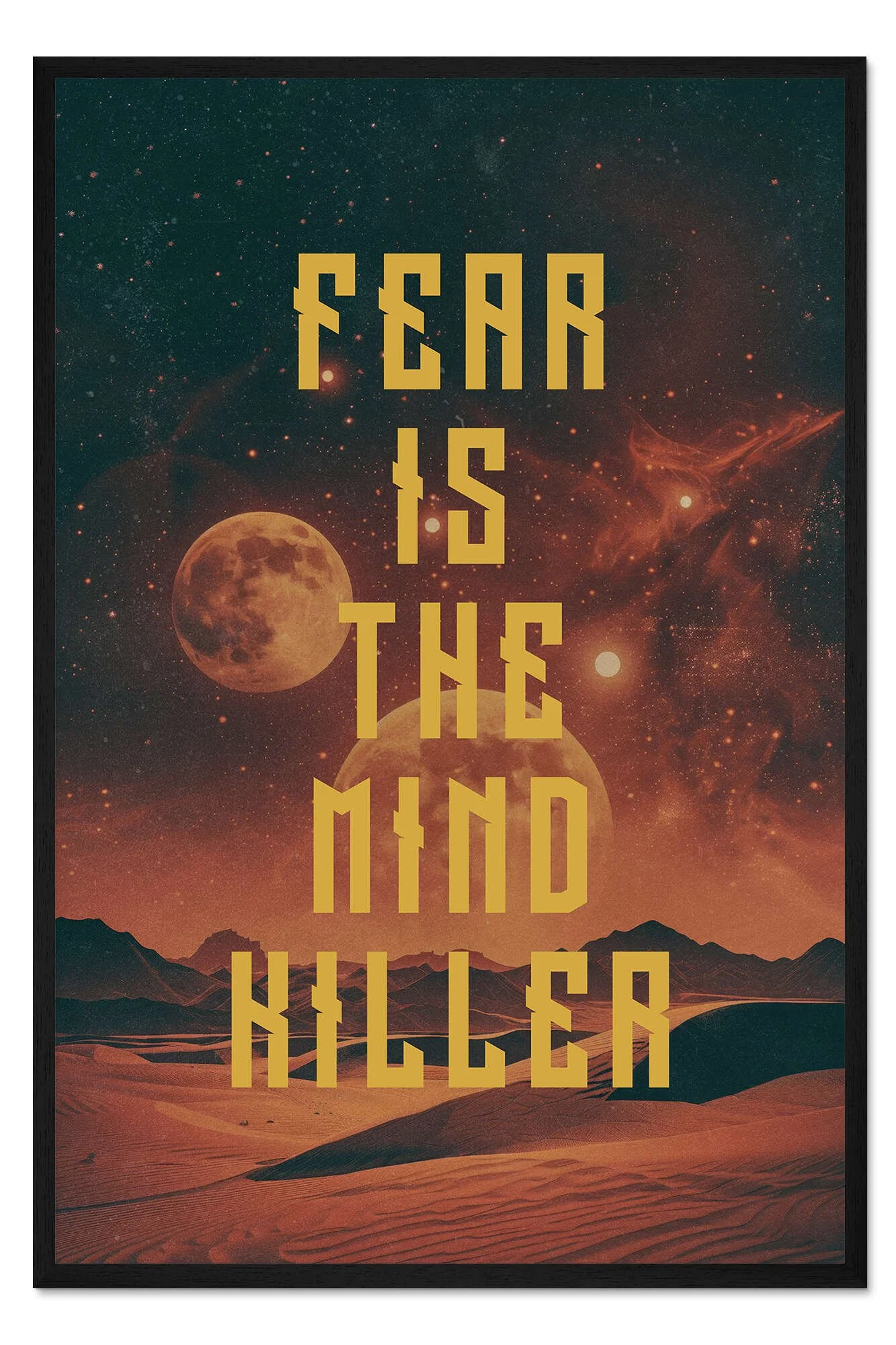
As Frank Herbert wrote in Dune, fear is the mind-killer. And for writers, the fear of making mistakes, overanalyzing every sentence, spiraling into self-doubt, waiting until everything feels ready, can stop a story before it ever really starts.
Remember: You can improve bad writing, but you can't improve something that was never written.
The first draft doesn't need to be good. Give yourself permission to write badly, to get it wrong, to leave a mess on the page that you'll clean up later. The creative phase and the editing phase are two different jobs, and trying to do both at once is one of the fastest ways to get stuck.
Every writer, no matter how experienced, lives with doubt. The ones who keep going aren't the ones who stopped feeling it. They're the ones who wrote anyway.
Your takeaway
I’ve shown you nine mistakes that are all fixable. None of them make you a bad writer. They make you a writer who's still learning, which is exactly what the craft asks of all of us.
Do you have a novel idea that just won’t leave you alone?
Maybe it’s time to stop wondering about it and start figuring out whether it’s ready to become something real. Is Your Novel Idea Good Enough is a practical, encouraging worksheet to help you evaluate whether your idea is strong enough to become a novel readers will love before you spend months drafting. You’ll spot red flags early, see what’s working, get clearer on what needs development, and test if you can stick with the idea long-term.
Happy Writing!
-Leslie