How to Choose a Great Book Title (With Genre Analysis)
Struggling to title your novel? Here's a step-by-step brainstorming process plus a deep dive into what's working in fantasy, sci-fi, horror, and more.

Choosing a title can feel completely overwhelming. There are so many options, you want to get it just right, and the stakes feel high, because a great book deserves a great title.
Here's the thing: a great book title needs to be specific, interesting, and give potential readers a hint of what's inside, without giving too much away. No pressure, right?
So let’s break this down step by step. The first half of this post covers the brainstorming process. The second half is something I'm genuinely nerdy-excited about: a deep dive into title patterns across fantasy, sci-fi, horror, YA fantasy, and romantasy using the 2024 Goodreads Choice Award nominees.
If you love analyzing books as much as writing them, stick around for that part.
By the end of this post, you'll have a clear process for generating title ideas and a solid understanding of what's resonating with readers in your genre right now.
Part one: How to brainstorm your book title
Step 1: Start with a brain dump
Get everything out first, no judgment yet. Focus on words and phrases that:
Capture the essence of your story
Feel emotionally charged
Are specific to your characters, setting, or themes
The Hunger Games is a great example of this done well. It doesn't just sound cool, it instantly evokes competition, survival, and stakes. That's the goal: a title that does real work before the reader even opens the first page.
Step 2: Do marketplace research
Your title needs to stand out and fit your genre.
Head to Amazon or Goodreads and search your main genre, then your subgenre. Look at the top titles. Are they short and punchy? Long and lyrical? Mysterious? Then pull your comp titles, books similar to yours, and look for naming patterns.
I did a full genre analysis for fantasy, sci-fi, horror, YA fantasy, and romantasy using the 2024 Goodreads Choice Award nominees, and it's in the second half of this post. It's worth reading before you finalize anything!
Step 3: Try creative constraints
Sometimes limiting yourself sparks the best ideas. Try these:
One-word titles: Can you sum up your whole book in a single powerful word? Divergent. Extinction. Defiant.
Three-word titles: To All the Boys. Short, specific, emotionally loaded.
Alliteration: Big Little Lies. Pride and Prejudice. These stick because they sound good out loud.
List titles: The Lion, the Witch, and the Wardrobe. Intriguing, descriptive, memorable.
Pick one constraint and generate ten options. You might surprise yourself.
Step 4: Scour your manuscript
Your manuscript might already be hiding the perfect title.
Look for repeated phrases, symbols, or metaphors that keep surfacing. Pay attention to dialogue that captures the heart of your story in a single line. The title you've been searching for is sometimes already in the text; you just haven't noticed it yet.

Step 5: Ask for input
If you're stuck, bring in fresh eyes.
Poll your friends, your critique group, or your writing community. Post a few options somewhere and let people react. Sometimes someone outside the story can immediately see what you've been too close to notice.
Part two: Title analysis by genre
I pulled the top 10 nominee titles from the 2024 Goodreads Choice Awards across five genres and looked for patterns. Here's what I found.
Fantasy
Titles analyzed: The Lost Story, The Familiar, The Book of Doors, The Map of Otherlands, Somewhere Beyond the Sea, The Fairy Tale Registry, Black Bird Oracle, Five Broken Blades, The Fox Wife, Empire of the Damned
What stands out:
Six of the ten titles start with "The,” which frames the subject as singular, specific, and important. Fantasy readers are drawn to worlds with unique, central elements.
The nouns create dramatic effect, as well: Story, Book, Map, Oracle, Blades, Empire. These carry inherent wonder and intrigue. And adjectives like Lost, Broken, Damned, Black add emotional weight and hint at the story's darker or more complex tone.
Title tip for fantasy writers: Lead with an evocative noun tied to a key element of your world. Add an adjective that signals mood: mysterious, dark, or fantastical. If your story has a significant location or magical object, consider building the title around it.
Science Fiction
Titles analyzed: The Mystery of Time, Orbital, Moon of the Turning Leaves, I Cheerfully Refuse, Extinction, The Other Valley, The Mercy of Gods, Annie Bot, The Family Experiment, The Stardust Grail
What stands out:
Cosmic and scientific imagery is everywhere: Time, Orbital, Moon, Extinction, Stardust. These words immediately signal genre. Single-word titles like Orbital and Extinction are bold and impactful. Science fiction often deals with enormous ideas, and a single stark word can carry that weight.
There's also a strong philosophical thread: The Mystery of Time, The Mercy of Gods. Sci-fi readers often come to the genre for stories that challenge big questions, and titles that hint at those themes pull them in.
Title tip for sci-fi writers: Consider cosmic imagery (orbit, moon, stardust), high-stakes vocabulary (extinction, collapse), or philosophical concepts (mercy, mystery, experiment). Single-word titles work particularly well in this genre.
Horror
Titles analyzed: Incidents Around the House, The Eyes Are the Best Part, Bury Your Gays, What Feasts at Night, I Was a Teenage Slasher, You Like It Darker, Sleep Tight, Murder Road, We Used to Live Here, Diavola
What stands out:
Horror titles are doing something really interesting: they're ambiguous in a way that unsettles. Incidents Around the House. What Feasts at Night. We Used to Live Here. The threat is implied, but never fully acknowledged.
There's also a strong trend toward subverted domesticity. Home, sleep, road… things that should feel safe are made sinister. Sleep Tight is a perfect example. A phrase everyone knows is suddenly creepy in context.
Title tip for horror writers: Leave the threat ambiguous. Use familiar, domestic settings and make them feel wrong. Sensory and visceral words, feast, eyes, darker, buried, create unease without revealing too much.
YA Fantasy
Titles analyzed: Heartless Hunter, Heir, Ruthless Vows, Wisteria, All This Twisted Glory, Reckless, Don't Let the Forest In, Defiant, Where the Library Hides, The Prisoner's Throne
What stands out:
Emotionally charged adjectives are everywhere: Heartless, Ruthless, Twisted, Reckless, Defiant. These signal morally complex, high-stakes characters, which is exactly what YA fantasy readers come for.
Short, punchy titles also dominate: Heir. Reckless. Defiant. Wisteria. One word, strong impression, instant curiosity. YA fantasy readers want something that sticks, and single evocative words do that well.
Power and legacy vocabulary, Heir, Throne, Vows, hints at destiny and high-stakes conflict, which is central to the genre.
Title tip for YA fantasy writers: Lead with a single emotionally charged word, or pair a sharp adjective with a meaningful noun. Power and legacy vocabulary resonates strongly. Think about what single word best describes your protagonist or their central conflict.
Romantasy
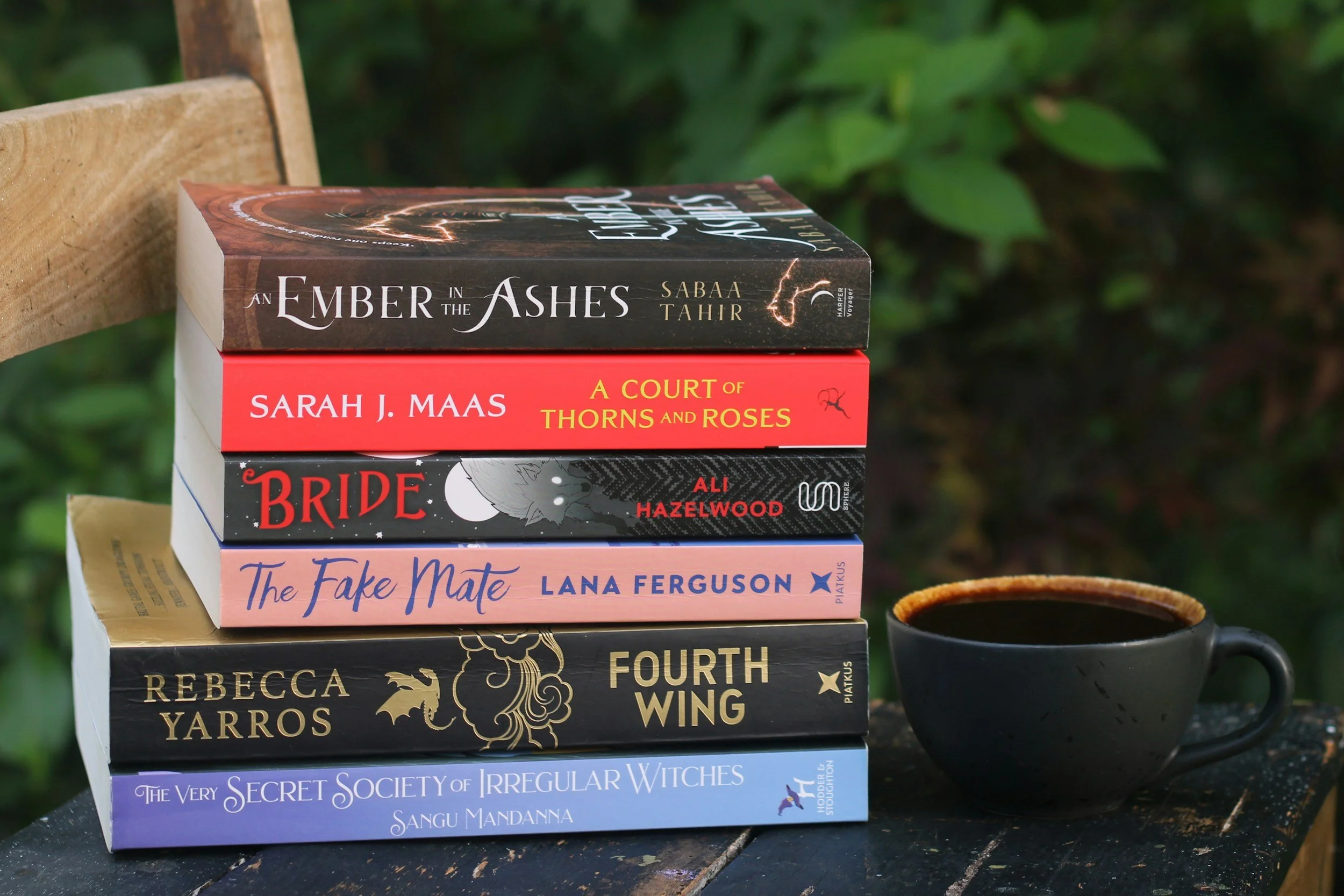
Titles analyzed: Apprentice to the Villain, The Spell Shop, Phantasma, Zodiac Academy: Restless Stars, A Fate Inked in Blood, When the Moon Hatched, A Touch of Chaos, House of Flame and Shadow, Born of Blood and Salt, Quicksilver
What stands out:
Romantasy titles lean into relationships and destiny: A Fate Inked in Blood, Born of Blood and Salt, Apprentice to the Villain. The relationship tension is right there in the title, morally gray dynamics, forbidden connections, fated bonds.
Magical imagery is everywhere too: Spell, Moon, Flame, Shadow, Phantasma. These words promise immersive, lush worlds. And elemental pairings, Flame and Shadow, Blood and Salt, show up repeatedly because they create an immediate atmosphere with just two words.
Title tip for romantasy writers: Lean into fate, magic, and morally complex dynamics. Elemental pairings work really well in this genre. Think about what the central relationship tension is and whether it can live in the title itself.
Your takeaway
A great title doesn't have to come to you in a flash of inspiration. Most of the time, it comes from a combination of good brainstorming, smart research, and understanding what's resonating with readers in your specific genre. Start with the brain dump. Do the research. Play with constraints. Scour your manuscript. And when you're stuck, ask someone. Your title is in there somewhere. Sometimes you just need a process to find it.
Ready to build a stronger foundation for your novel?
Fiction Flow for Otherworldly Stories is a step-by-step digital training for fantasy, sci-fi, and horror writers who want a clear path from story idea to first draft. Through video lessons, templates, and planning tools, writers learn exactly what steps to take to build a strong story foundation, outline with confidence, and finally move forward without the overwhelm.
The "right" title is the one that feels specific and true to your story. You'll know it when you find it. This process will help you get there.
Happy Writing!
-Leslie