What Is a Book Coach? Do You Actually Need One?
The term "book coach" gets thrown around a lot. Here's what one actually does, who benefits most, and an honest look at whether it's worth it for you.
A lot of writers hear the term "book coach" and think… Okay, but what does that actually mean? Do I need one?
I'm Leslie, and I'm a book coach with a certification in fiction from Author Accelerator. I love this work deeply, and I've personally witnessed the kind of transformation writers can experience when they have the right support behind them.
But I want to talk about both sides today. Why you might want to hire a book coach, and why you might not. I'll be upfront that yes, there's some bias here, because I genuinely believe in what I do. At the same time, I know the term "book coach" can feel vague or mysterious if you've never worked with one. So my goal is to demystify it.
By the end of this post, you'll have a clear sense of what a book coach actually does, what one is not, who tends to benefit most, and how to decide whether it's the right fit for you.

Why is "book coach" so confusing?
Part of the confusion comes from how many different kinds of support exist for writers. Editor. Critique partner. Writing teacher. Writing group. Course creator. Coach. Mentor. From the outside, these can all start to sound like the same thing with slightly different branding.
But they're not solving the same problem.
On top of that, book coaches themselves can offer very different kinds of services. One coach may focus heavily on story structure and development. Another may specialize in accountability and keeping writers on track. Another might focus on revision or pitch materials. So even when two people use the same title, they may not be offering the same kind of support.
If you've felt confused by all of this, that's a completely reasonable response to a genuinely unclear landscape.
So, what is a book coach, actually?
In plain terms: a book coach is someone knowledgeable in storytelling, genre, publishing, goal-setting, and the emotional realities of the writing process who helps writers reach their goals through guidance, structure, feedback, and accountability.
A book coach helps you take something that feels huge and overwhelming and breaks it into steps that feel manageable.
Because writing a book is about so much more than putting sentences on a page. You're making decisions about structure, momentum, character, pacing, and even what kind of book you're actually trying to write. You're learning how to recognize when you're stuck, how to figure out what matters most right now, and how to stop spinning long enough to move forward with some confidence.
Most writers aren't struggling because they're lazy or untalented. They're struggling because there are so many moving parts to hold at once. The story idea, the character arc, the worldbuilding, the plot, the tension, the pacing, and then layered on top of all of that, the confidence, the consistency, the doubt, and the realities of actual life. When all of those things start colliding, it becomes incredibly difficult to know what the next right step is.
A good book coach helps create clarity when everything feels tangled. They help you zoom out, see the big picture, then break it into pieces you can actually work with. They help you make decisions, stay connected to the story you're trying to tell, and keep moving when uncertainty would otherwise stop you cold.
Writing can be lonely, deeply vulnerable, and surprisingly easy to derail with perfectionism, self-doubt, or that awful feeling of, "I don't even know if I'm doing this right anymore." A coach can't take all of that away, but they can help you move through it with more steadiness and a lot less confusion.
What a book coach is not
A book coach is not the same thing as a class. A class gives the same material to everyone. Coaching is tailored. It responds to your specific book, your process, your roadblocks, your goals, and the stage of writing you're actually in.
A book coach is not the same thing as a critique group. Critique groups can be wonderful, but they tend to give you multiple opinions, mixed levels of experience, and feedback that may or may not align with what your particular book needs. Coaching is usually more strategic, more focused, and more consistent over time.
And a book coach is not there to write the book for you. This is still your work, your voice, your story, and your responsibility. A coach is not there to make the process effortless, they're there to help you navigate it with more clarity, more intention, and a lot less wasted energy.
Who tends to benefit most from a book coach?
Usually it's writers who feel overwhelmed by the scope of what they're trying to do.
Writers can be too close to the manuscript to see what's actually going wrong. Writers might know deep down they would make better progress with expert guidance and accountability than by piecing together random advice from a hundred different places.
Sometimes it's the writer who says, "I know I want to write this book but I honestly don't know where to start." Sometimes it's the writer who has started three different versions and keeps getting lost in the middle. Sometimes it's the writer with a full draft who can tell something isn't working but has no idea how to fix it.
You don’t need to question whether you’re “good enough” to write a book. Rather, you might need support to help you move through the process in a stronger, clearer, and more sustainable way.
Who probably doesn't need a book coach right now?
Some writers already have a strong process and feel genuinely confident in their work. They know how to plan, draft, problem-solve, revise, and keep going without a lot of outside support. If that's you, coaching may not be the best fit right now, and that's completely valid.
But the element I see most often with writers who aren't ready for coaching yet isn't actually about the process, but the mindset.
Not everyone is in a coachable place at every stage of their writing life. Are you ready for feedback? Are you open to being challenged? Are you willing to honestly evaluate your process, even the parts that aren't working?
Coaching works best when a writer is actually willing to engage with that process. You don't have to agree with every piece of feedback, and you absolutely don't need to turn your manuscript into someone else's vision. But if outside input currently feels threatening, or you already know you're not ready to hear where your book might need work, coaching may not be the right fit yet.
That's okay. That's genuinely useful information about where you are right now.
Is it worth paying for?
Here's my honest answer: it depends on your values, your goals, and how you work best.
Let me use a non-writing example. I pay a personal trainer to work with me once a week. Could I put together workouts on my own? Yes. The internet exists and I could find routines, piece together a plan, and probably make some progress.
But I know myself well enough to know I reach my goals much more slowly when I'm trying to figure everything out alone. I do better with accountability and expert guidance, and I spend less energy figuring out what to do next and more energy actually doing it.
Does everyone who is fit have a personal trainer? No. It just means I know what helps me follow through.
And it comes down to values too. My health matters to me. I want to be strong and do the things I love, so that investment feels worth it.
Writing works the same way. If you're a casual hobby writer who is genuinely happy exploring at your own pace, book coaching may not be worth the investment. But if you have publishing goals that feel important to you and you want help reaching them more intentionally, it may be.
Some writers genuinely thrive with structure, support, accountability, and expert guidance. They make faster progress, make clearer decisions, spend less time spiraling, and stay with the book longer. For those writers, coaching can absolutely be worth it.
For other writers, independence is part of what makes the process enjoyable. They want to experiment, wander, and figure things out on their own terms. That's completely valid too.
The questions worth asking yourself are:
What are your goals?
What do you value in your writing life?
What kind of support actually helps you finish things?
Are you trying to move faster, get unstuck, build a stronger process, or reduce overwhelm?
And are you someone who tends to do better with accountability and expert guidance?

A taste of what book coaching can look like
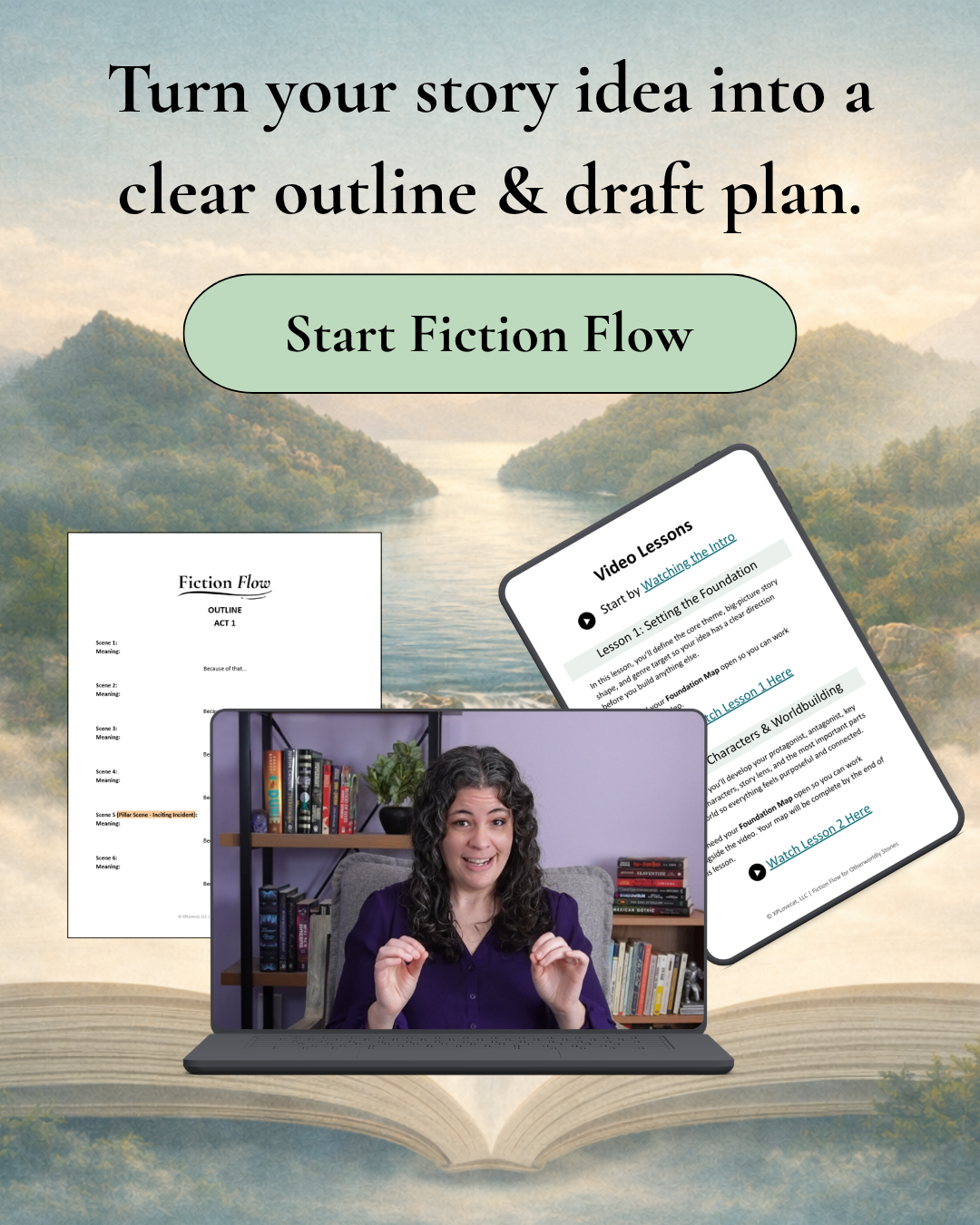
I typically work with writers who are just starting out with an idea or are in the early, messy drafting stages. If that's where you are, I have something designed specifically for you. It’s called Fiction Flow, and it helps you turn your story idea into a solid foundation and walk away with a draft plan.
Your Takeaway
A book coach helps writers with clarity, structure, momentum, feedback, and accountability, but the exact support varies from one coach to another. Whether it's worth it comes down to fit: your process, your goals, your budget, your values, your openness to feedback, and the kind of support that helps you do your best work.
I love book coaching. And I've seen what can happen when writers stop trying to do every single part of this alone and start getting the kind of support that actually helps them move forward. But I also think it's completely okay if you read this and realize "not yet" or even "not for me."
More than anything, I hope this made the whole idea feel a little less mysterious.
If you have questions or you're trying to figure out whether it's the right fit for you, feel free to reach out.
Happy Writing!
-Leslie
P.S. If you're not sure whether coaching is right for you right now, Fiction Flow is a great low-stakes way to get a feel for how I work, and helps you walk away with a real plan for your novel.